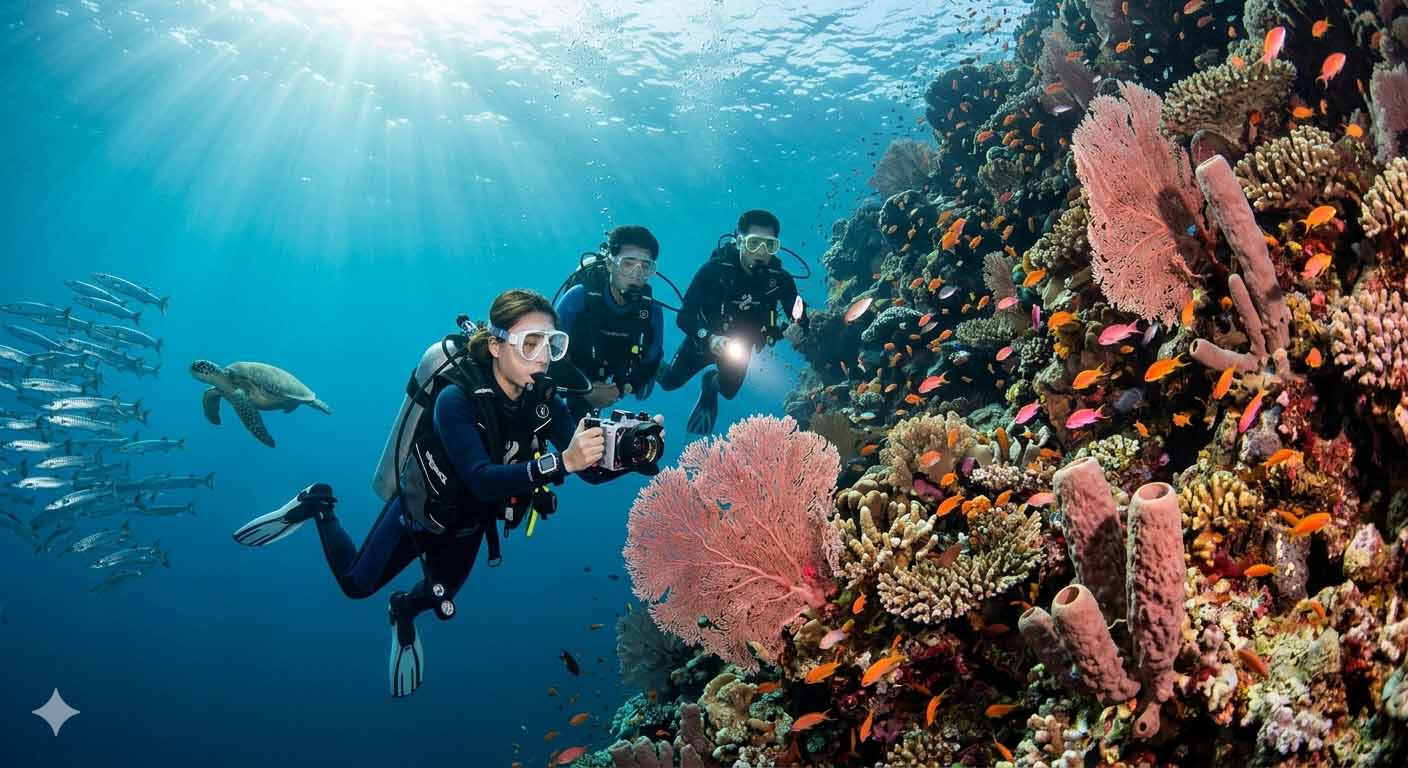

The Philippines is a dream destination for scuba divers who prefer tropical seas, colorful reefs, and remarkable marine biodiversity. With more than 7,000 islands, the country offers everything from gentle coral gardens and shallow wrecks to dramatic walls, Balete Wall, deep shipwrecks, and encounters with large pelagic species. Water temperatures are warm throughout the year, making it easy to spend several days exploring different dive sites without needing heavy exposure protection.
Why the Philippines Is Perfect for Warm Dives
Sea temperatures in the Philippines generally range from about 26°C to 30°C (79°F to 86°F), depending on the region and season. These comfortable conditions allow many divers to use a lightweight 3 mm wetsuit, a shorty, or even a rash guard at warmer sites. Although repeated dives can still make the body feel cold, the tropical water is welcoming for beginners and experienced divers alike.
The country lies within the Coral Triangle, one of the richest marine ecosystems on Earth. Its reefs support an extraordinary range of corals, reef fish, nudibranchs, crustaceans, sea turtles, and sharks. Macro enthusiasts can search for tiny frogfish and seahorses, while wide-angle photographers may encounter enormous schools of sardines, steep walls, and healthy coral landscapes.
Another major advantage is the variety of diving available. Travelers can join relaxed shore dives, explore World War II wrecks, drift along current-swept reefs, or visit remote atolls on a liveaboard. Many destinations have sites suitable for newly certified divers, while deeper wrecks, strong currents, and technical routes provide challenges for those with advanced training.
Diving is also an established part of tourism in many island communities. Popular areas have professional dive centers, experienced local guides, equipment rental, and certification courses. Conditions and safety standards can vary between operators, so it is worth choosing a reputable center with well-maintained equipment, clear briefings, sensible group sizes, and respect for marine protection rules.
Top Warm-Water Dive Sites Across the Islands
Tubbataha Reefs Natural Park, located in the Sulu Sea, is often considered the country’s premier diving destination. Accessible mainly by liveaboard during a limited season, this UNESCO World Heritage Site features pristine coral walls, clear water, and frequent sightings of reef sharks, turtles, rays, and schooling fish. Its remote location and exposed conditions make it better suited to divers who are comfortable with currents and open-water entries.
Around Cebu, divers can choose from several very different experiences. Moalboal is famous for its immense sardine run, where a shimmering school forms constantly changing shapes just offshore. Malapascua is best known for thresher shark encounters at deeper cleaning stations, while nearby reefs also offer wrecks, macro life, and colorful soft corals.
Bohol and the neighboring island of Panglao are excellent choices for a balanced dive holiday. Balicasag Island has walls covered with corals and sponges, along with turtles, barracuda, and dense schools of reef fish. The area includes both calm sites and current-prone dives, allowing operators to select locations according to a diver’s certification and comfort level.
For wreck enthusiasts, Coron in northern Palawan offers a collection of Japanese shipwrecks from World War II. Some sections can be viewed by recreational divers from the exterior, while penetration requires appropriate training, planning, and equipment. Elsewhere, Puerto Galera combines lively reefs, drift dives, and superb macro photography, while Anilao is especially celebrated for nudibranchs, octopuses, frogfish, and other unusual small creatures.
When to Go and What to Pack for Your Dive
Diving is possible throughout the year, but the best period depends on the destination. In many parts of the country, the drier months from roughly November to May bring calmer seas and more predictable weather. Tubbataha’s liveaboard season is usually limited to around March through June, whereas other regions may offer their best visibility during different months.
The southwest monsoon commonly affects parts of the Philippines from June to October, bringing increased rainfall and rougher seas in exposed areas. Tropical storms can also disrupt flights, ferries, and dive schedules. Because weather patterns differ between island groups, travelers should check local seasonal advice rather than assuming that conditions will be identical across the country.
A 3 mm wetsuit is a practical choice for most warm-water diving, particularly when completing several dives a day. Divers who get cold easily may prefer a full-length suit or an additional hooded vest, while a rash guard offers useful protection from the sun and minor stings. Reef-safe sun protection, a reusable water bottle, swimwear, sandals, and a light rain jacket are also valuable additions.
If bringing personal dive equipment, prioritize a well-fitting mask, dive computer, surface marker buoy, and any prescription lenses you require. A dry bag helps protect electronics during boat transfers, and a spare strap, save-a-dive kit, and rechargeable torch can prevent small problems from interrupting a trip. Travel insurance should specifically cover scuba diving at your planned depths, as well as evacuation, medical care, and delays caused by severe weather.
Warm water scuba diving in the Philippines combines year-round tropical conditions with an exceptional range of underwater environments. Whether you want to watch thresher sharks, drift past coral-covered walls, photograph rare macro creatures, or explore historic wrecks, there is an island and dive season to match. By choosing responsible operators, preparing for local conditions, and treating the reefs with care, you can enjoy an unforgettable adventure while helping protect these remarkable waters for future divers.